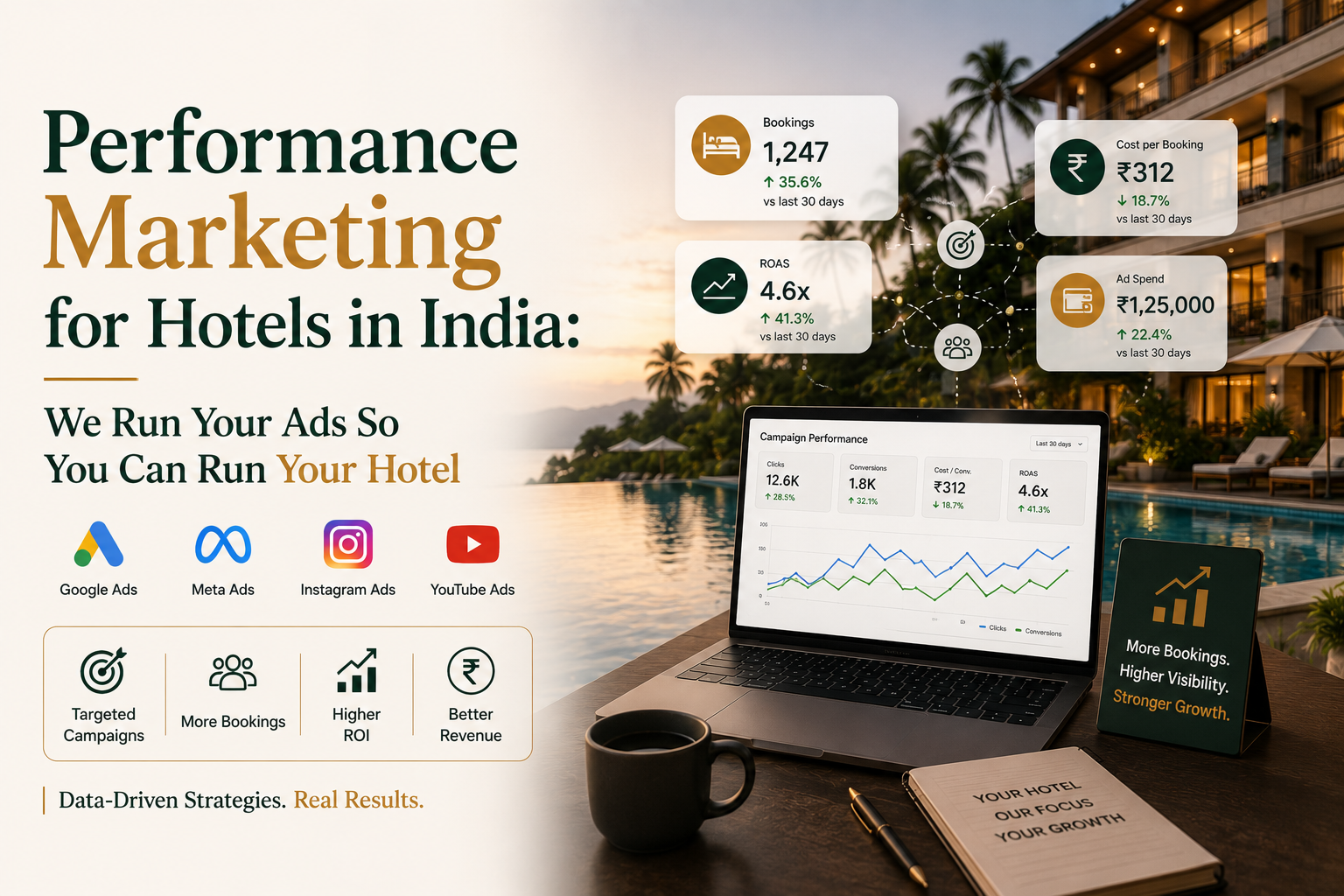

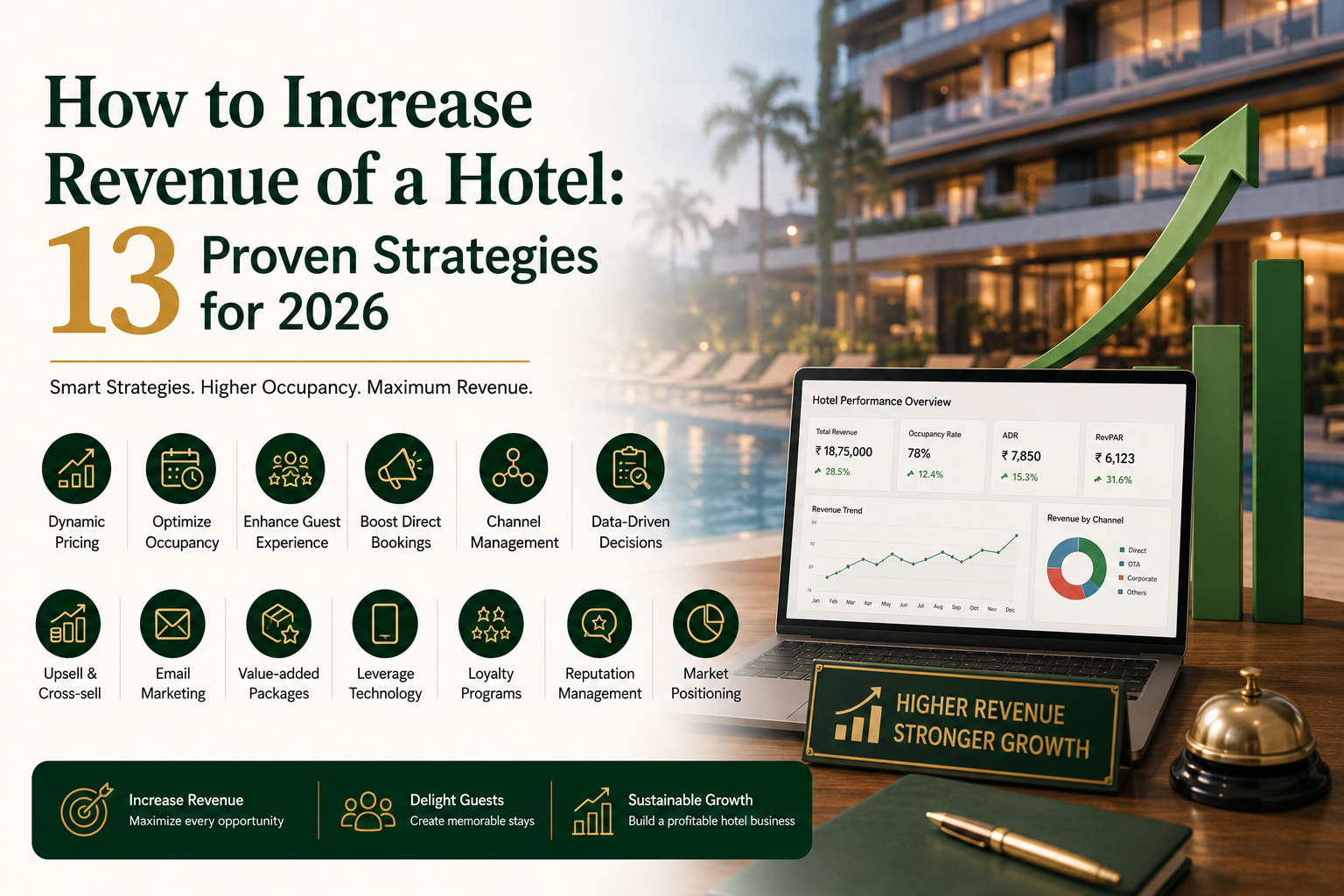
In today’s competitive hospitality landscape, how to increase hotel revenue is the single biggest question keeping hotel owners and general managers up at night. Rising operational costs, evolving guest expectations, and intense competition from OTAs and new-age boutique stays mean that simply filling rooms is no longer enough. At Wilderkeys India, we work with boutique hotels, resorts, and villas across the country to help them unlock sustainable, profitable growth — and in this guide, we’re sharing the exact hotel revenue management strategies that are driving results in 2026.
Whether you run an independent boutique property in the hills or a resort by the coast, this blog will walk you through actionable, data-backed techniques to boost your average daily rate (ADR), RevPAR, occupancy, and total revenue per available room (TRevPAR) — without compromising guest experience.
Many hoteliers assume that increasing revenue simply means raising room rates or running more discounts during the off-season. In reality, hotel revenue growth is the result of dozens of smaller decisions working together: how you price each room type, which channels you sell through, how you treat repeat guests, how visible your property is online, and how well your team converts inquiries into confirmed bookings. The good news is that none of this requires a massive budget or a five-star brand name — it requires the right strategy, consistently applied.
Why Hotel Revenue Strategy Matters More Than Ever in 2026
The hospitality industry is at an inflexion point. Demand can shift overnight, competitor rates no longer tell you anything meaningful about strategy or inventory levels, and old-school rate-matching tactics simply can’t keep pace with today’s market reality. Hotels that rely only on instinct or outdated spreadsheets are falling behind properties that use dynamic pricing, guest segmentation, and total revenue management to make smarter, faster decisions.
For independent and boutique properties, especially, this shift is an opportunity. Advanced revenue management tools and techniques — once considered the privilege of large hotel chains — are now accessible to properties of every size. The goal for 2026 isn’t just to increase bookings; it’s to increase profitable bookings, build guest lifetime value, and diversify income beyond the room rate alone.
Let’s break down the strategies that matter most.
1. Implement Dynamic Pricing for Maximum ADR
Static room rates are one of the biggest revenue leaks in the hotel industry. Dynamic pricing means adjusting your room rates in real time based on demand, booking pace, seasonality, local events, and competitor positioning. When demand is high — a wedding season, festival, or local event — your rates should rise. When demand softens, strategic discounting helps maintain healthy occupancy without devaluing your brand.
This is the foundation of effective hotel revenue management, and it’s achieved by selling the right room to the right guest, at the right time, for the right price, through the right distribution channel. At Wilderkeys India, we use advanced revenue management techniques and market insights to recommend the right rates at the right time, helping your property achieve the best possible revenue performance.
It’s worth noting that dynamic pricing isn’t about chasing the highest possible rate every single night. Selling out every room isn’t necessarily the most profitable outcome if it means leaving money on the table during high-demand dates, or it isn’t the most successful version of running your property if rates were too low to begin with. The real skill lies in finding the sweet spot between occupancy and rate on a night-by-night, segment-by-segment basis — something that becomes far easier with the right revenue management system (RMS) or a dedicated revenue partner monitoring your numbers daily.
2. Focus on Total Revenue Management, Not Just Room Revenue
Room revenue is only one piece of the profitability puzzle. The hotels seeing the strongest growth in 2026 are optimizing profit across every guest touchpoint — food and beverage, spa services, events, retail, and add-on experiences. This is called total revenue management (TRevPAR), and it captures the full guest revenue picture that traditional RevPAR metrics miss.
Practical ways to grow ancillary revenue include:
- Curated in-room dining and minibar experiences
- Spa, wellness, and excursion packages bundled with stays
- Late checkout, early check-in, and room upgrade upsells
- Local experience partnerships (nature trails, cultural tours, adventure activities)
For boutique resorts and villas — Wilderkeys India’s speciality — ancillary revenue can often rival or exceed room revenue itself when packaged thoughtfully.
3. Increase Direct Bookings to Reduce OTA Commission Costs
Every booking made through an online travel agency (OTA) costs your hotel a commission — often 15-25% of the booking value. Increasing direct bookings is one of the fastest ways to improve your bottom line without raising rates at all.
To drive direct bookings:
- Optimize your hotel website for mobile-first, fast, frictionless booking
- Offer direct-booking incentives (free breakfast, flexible cancellation, member discounts)
- Invest in local SEO and Google Hotel Ads to capture high-intent search traffic
- Build an email and WhatsApp database to nurture repeat and direct guests
A well-optimized direct booking funnel doesn’t just save commission — it builds a guest relationship Wilderkeys India can use to drive repeat business and loyalty over time.
It’s also important to remember that direct bookings aren’t just a website problem — they’re a trust and visibility problem. Guests need to feel confident booking directly, which means your website needs clear photography, transparent pricing, genuine reviews, and a secure, simple payment process. Pairing a strong direct channel with targeted social media presence, especially on Instagram, helps boutique properties in particular punch above their weight against larger branded competitors.
4. Leverage Data-Driven Market Segmentation
Not every guest is the same, and not every guest costs the same to serve. Market segmentation means grouping your guests by behavior, preferences, booking channel, and spend patterns — then customizing your pricing and marketing to each segment.
For example, a repeat direct booker who spends generously on property may deserve a loyalty perk, while a one-time OTA guest might need a more standardized offer. Smart segmentation lets you:
- Personalize offers and packages by guest type
- Identify your most profitable guest segments and double down on acquiring more of them
- Reduce reliance on low-margin, price-sensitive channels
5. Optimize Length of Stay (LOS), Not Just Nightly Rate
A growing trend in 2026 hotel revenue management is shifting focus from single-night rate optimization to length-of-stay (LOS) pricing. Encouraging guests to extend their stay by even one additional night — through incentivized multi-night packages or stay-longer discounts — improves your operating margins significantly, since the cost of acquiring that guest is already sunk.
This is especially powerful for resorts, hill stations, and leisure destinations where guests are already inclined to relax and explore the surrounding area.
6. Invest in Forecasting and Demand Intelligence
You can’t price strategically if you don’t know what’s coming. Forecasting — analyzing historical booking data, local events, seasonality, and market trends — is the backbone of proactive revenue management. It helps hotels:
- Anticipate high-demand periods and price accordingly in advance
- Avoid underpricing during slow seasons
- Plan staffing, inventory, and marketing budgets more accurately
- Spot revenue opportunities competitors might miss
Hotels that forecast well don’t just react to demand — they get ahead of it.
7. Strengthen Your Online Reputation and Reviews
Guest decisions are increasingly shaped by online reviews, ratings, and reputation — and this has a direct, measurable impact on your ADR and conversion rate. A strong review profile on Google, TripAdvisor, MakeMyTrip, and Booking.com allows you to command higher rates with greater confidence.
Build a system to:
- Request reviews systematically post-stay (via email or WhatsApp)
- Respond promptly and professionally to all reviews, positive and negative
- Showcase guest testimonials and high ratings prominently on your website and OTA listings
8. Strengthen Distribution Channel Management
Where you sell your rooms matters as much as how you price them. Effective distribution management means strategically balancing your inventory across OTAs, direct channels, GDS, and wholesalers to minimize distribution costs while maximizing reach. Selling too much inventory through high-commission channels erodes profitability, even at high occupancy.
A well-managed distribution mix ensures:
- Rate parity across channels (protecting your brand and direct channel value)
- Lower blended cost of acquisition per booking
- Better control over which guest segments you attract
9. Build Guest Lifetime Value (LTV), Not Just One-Time Bookings
The most forward-thinking hotels in 2026 have stopped optimizing purely for individual bookings and started optimizing for guest lifetime value. A guest’s true worth to your property includes their likelihood to return, their on-property spend, and their probability of booking direct next time.
This means:
- Building guest profiles that track preferences, spending habits, and booking patterns
- Using post-stay communication to nurture repeat visits
- Creating loyalty incentives that reward direct, repeat engagement over one-off OTA bookings
10. Train Your Front Office and Staff on Revenue Awareness
Revenue strategy shouldn’t live in a silo. When front office and guest-facing teams understand the reasoning behind pricing and packages, they communicate value more confidently to guests — which directly improves upsell conversion and guest satisfaction. Cross-training operations, sales, and front-desk staff on basic revenue principles creates a culture where every team member contributes to the property’s commercial performance.
11. Plan Ahead for Seasonal Demand and Local Events
Seasonality and local events are some of the most predictable — yet most underused — revenue levers available to hoteliers. Festivals, weddings, sporting events, conferences, and even long weekends create windows of high demand that should be priced and marketed well in advance, not reacted to at the last minute.
A strong seasonal revenue strategy includes:
- Mapping out a 12-month calendar of regional festivals, holidays, and events relevant to your property’s location
- Adjusting minimum length-of-stay requirements during peak demand windows to maximize total revenue per room
- Creating early-bird packages for high-demand periods to lock in bookings before competitors raise their own rates
- Building flexible, lower-cost packages for shoulder and off-peak seasons to maintain healthy occupancy year-round
For boutique resorts and villas in destinations like Uttarakhand, Goa, Himachal, or Rajasthan, local event calendars often matter more than national trends — which is exactly why a revenue strategy tailored to your specific market, rather than a generic one, makes such a measurable difference.
12. Partner With Hotel Revenue Management Experts
For many boutique hotel owners, the biggest barrier to better revenue performance isn’t a lack of opportunity — it’s a lack of time, tools, or in-house expertise. This is exactly where Wilderkeys India comes in.
As a dedicated hotel services management company, we specialize in reservation and revenue management, digital marketing, and guest experience optimization for boutique hotels, resorts, and villas across India. Our team brings hands-on hospitality expertise to:
- Set up and manage dynamic, data-driven pricing strategies
- Optimize your OTA and direct booking mix to reduce commission leakage
- Run targeted digital marketing campaigns that drive qualified, high-intent traffic
- Train your staff to deliver consistent, revenue-positive guest experiences
- Track key performance indicators like ADR, RevPAR, occupancy, and TRevPAR to refine strategy continuously
Final Thoughts: Building a Sustainable Revenue Strategy for Your Hotel
Increasing hotel revenue in 2026 isn’t about chasing a single silver-bullet tactic — it’s about building an integrated strategy that combines smart pricing, diversified revenue streams, strong direct booking channels, and genuine guest relationships. The properties that thrive will be the ones that treat revenue management as an ongoing, data-informed practice rather than a one-time fix.
Set clear, measurable goals rather than vague ones. “Increase revenue” isn’t a strategy — “increase direct booking share from 25% to 35% by next quarter” or “improve average length of stay by half a night during peak season” are goals you can actually track, act on, and adjust over time. Review your key metrics monthly, benchmark against your local competitive set, and stay willing to course-correct as market conditions shift.
If you’re a boutique hotel, resort, or villa owner looking to transform your property’s financial performance, Wilderkeys India is here to help. From reservation and revenue management to digital marketing and guest experience, our team brings the expertise, tools, and hands-on support to help you achieve measurable, lasting growth.Ready to increase your hotel’s revenue? Partner with Wilderkeys India today and let our experts craft a customized revenue strategy for your property.